Posts

Showing posts with the label Environmental and Rural Sciences (IBERS)

New Bursary for Aberystwyth University students

Image
Aberystwyth University has launched a new bursary for students, thanks to a generous donation from a South African businessman who has made Wales his home. The main aim of the Rashid Domingo Student Bursary is to help with the maintenance costs of students who show academic promise but who may be deterred from going to University for financial reasons. After creating a number of scholarships and bursaries in his native South Africa, Mr Domingo was keen to turn his philanthropic interests to Wales and Welsh students help able and deserving candidates to achieve their academic potential. The award is worth up to £12,000 over three years and is open to applicants for undergraduate courses in IBERS or the Department of Physics who have attended secondary school or college in Wales for a period of at least three years. The bursary can be used to help pay for accommodation and other living expenses as well as costs associated with studies such as buying books and study-related equipment. ...

Rumen fluke now very common on Welsh farms, study shows

Image
A study by scientists at Aberystwyth University’s IBERS working with Wales YFC reveals that rumen fluke (Calicophoron daubneyi) is now prevalent on Welsh farms. Funded by Coleg Cymraeg Cenedlaethol and an Owen Price Scholarship in conjunction with Wales YFC, the study is published today in the journal Parasitology. See link - Rumen fluke (Calicophoron daubneyi) on Welsh farms: prevalence, risk factors and observations on co-infection with Fasciola hepatica The research was undertaken by scientists at the Institute of Biological, Environmental and Rural Sciences (IBERS) working in partnership with young farmers in Wales to identify rumen fluke prevalence levels and associated risk factors across Wales. Rumen fluke was previously regarded as a rare parasite, but is now an emerging problem in the UK and information on its prevalence in Wales has been very scarce to date. The similar parasite liver fluke is one of the biggest problems facing the UK livestock industry, estimated to co...

Student family says thank you with trees for Aberystwyth

Image
The parents of an Aberystwyth University graduate have donated trees to a local nature reserve as a thank you for their daughter’s excellent education. Since graduating in Countryside Conservation from the Institute of Biological, Environmental and Rural Sciences (IBERS) in July 2016, Lizzie Tyson and her parents have been reflecting on her happy time at Aberystwyth - including her work at Parc Natur Penglais with the student Conservation Volunteers group. Seeing her enthusiasm for the education and experiences gained at Aberystwyth, Lizzie’s parents decided they would like to give something back to the University and town in a fitting way by generously donating lime and wych elm tree saplings to be placed in Parc Natur Penglais, where Lizzie spent some of her most enjoyable times. Famed for its fine displays of wild bluebells in early spring and spanning 11 hectares, the park offers peaceful woodland walks and excellent views of the town. Once part of the Penglais Estate, the beaut...

BEACON Wales co-founder of new alliance to support growth of UK bioeconomy

Image
The award-winning BEACON Wales project is one of five established R&D centres across the UK announcing a new alliance today - BioPilotsUK. This alliance will seek to position Britain as a global leader in biorefining technology development and bio-based product manufacture – two key elements of the bioeconomy. The founding centres are BEACON (Wales), the Biorenewables Development Centre (BDC - York), the Centre for Process Innovation (CPI - Redcar), IBioIC (Scotland) and The Biorefinery Centre (Norwich). BEACON is a Welsh Government EU funded collaboration led by Aberystwyth University working with Bangor and Swansea Universities where scientists specialise in bio-refining. BioPilotsUK brings together the nation’s leading expertise and facilities to help innovative ideas navigate the so called “valley of death” by demonstrating new bio-based processes and products at a commercially-relevant scale, in turn helping clients invest in the right technologies to grow their businesses....

Aberystwyth scientists offer free frailty course

Image
Sports and exercise scientists at Aberystwyth University’s Institute of Biological, Environmental and Rural Sciences (IBERS) are launching a MOOC course on recognising and preventing frailty in older adults. The free online course starts on October 29th and will be part of EITHealth , one of the largest healthcare initiatives worldwide, aiming to promote the future conditions for healthier living and wellbeing of people across Europe. Delivered by Dr Marco Arkjesteijn a Lecturer in Sport and Exercise Biomechanics and his colleague Rhian George, a 2016 graduate and newly qualified Sports and Exercise Scientist at IBERS; the course will focus on what frailty is, why it matters and how frailty is recognized and prevented. Dr Arkesteijn said “As one gets older, the physical and mental capacity tends to decrease. This can result in disability, such as an inability to walk independently, or to get dressed without help from others. However, often the changes that happen with ageing occur ...

IBERS scientists embark on giant panda research

Image
Scientists at Aberystwyth University’s IBERS are well known for their research into agricultural animals and plants, but now a team of young researchers at the Institute are embarking on a new project to evaluate how a parasite which can affect giant pandas responds to anti-parasitic drugs. Dr Russ Morphew and PhD student Cat Pye are working with Iain Valentine of the Royal Zoological Society of Scotland (RZSS), the conservation charity that owns and manages RZSS Edinburgh Zoo, with links to Chinese research centres, on a three year project to identify how the parasite responds to anti–parasitic drugs and, more specifically, whether drug resistance is the cause of repeat infections in captive giant panda populations. Dr Morphew said: “We hope that our findings will not only help to inform conservation strategies in captivity and across China’s giant panda reserves, but also that they could lead to improved control strategies to deal with infection in the future.” The project has been...

Daddy longlegs and an ecosystem under threat from climate change

Image
PhD research student Matthew Carroll, jointly of the Department of Biology, University of York and IBERS, Aberystwyth University, is a key contributor to an article published in Nature Communications today. Several rare upland bird species are being put at risk together with other ecosystem functions by the effects of climate change on the UK’s blanket bogs, ecologists at the University of York, Aberystwyth University and RSPB have discovered with the ecological research component on craneflies undertaken by Matthew and jointly supervised by Peter Dennis of Aberystwyth University. Most of our drinking water comes from these upland peats and several iconic bird species such as the dunlin, golden plover and red grouse depend on these wetland habitats for nesting and feeding. The scientists warn that climate change threatens these habitats, not only from rising temperatures increasing peat decomposition, but also via altered rainfall patterns – with summer droughts drastically affecting...

Lucky four-leaf clovers in the sub-arctic could prove valuable to future plant breeding

Image
The lucky discovery of four-leaf clovers in the sub-arctic could prove valuable to future plant breeding research. Students in IBERS (Insitute of Environmental and Rural Sciences) in Aberystwyth made some lucky discoveries on a recent fieldtrip to the village of Abisko in the Swedish Lapland to study Arctic Ecology. In addition to seeing several Arctic-alpine plant species the students also found several red clover plants (Trifolium pratense L.). These were growing in disturbed areas near paths, houses and the rail road. On closer examination of the area, the students made the exciting discovery that a surprising number of plants had four, five and even six leaves. IBERS is an internationally recognised research and teaching centre and a world leader in grass and clover breeding and has an active red clover breeding programme that seeks to improve dry matter yield and resistance to pests and diseases. Abisko is a small village in northern Sweden, 200km north of the Arctic Circle. ...

Aberystwyth scientists support first ever all Wales ‘Fire Ride’

Image
Scientists at Aberystwyth University’s Institute of Biological, Environmental and Rural Sciences (IBERS) are supporting Wales’ Fire and Rescue Service personnel in their charity bike ride to raise £15,000 for the Fire Fighters Charity and Wales Air Ambulance. The sports physiologists at IBERS are advising the team on the best way to prepare in relation to energy and fluid replacement strategies for the 14-day event. The very first ‘Fire Ride’ is a bike ride that links up all of Wales’ 152 Fire Stations, and will take place over 14 days between 22nd May – and the 4th June 2015. A core team of riders will complete the full 1350-mile ride, and hundreds more are expected to support and join in the challenge by completing individual stages of the event. The course will cover Wales' beautiful landscapes and joining up all of the fire service communities around the country. All Service personnel are welcome and there is a ride for all abilities, from extreme sports and endurance enthus...

Surviving the heat for a good beer

Image
Researchers at the Institute of Biological, Environmental and Rural Sciences at Aberystwyth University have collaborated with scientists from Dijon, France to try to solve the problem of bad tasting beer. Beer brewers face a tricky problem. The high level of activity in the yeast used to produce beer generates a lot of heat during the brewing process raising the temperature at the bottom of brewing vats. Unfortunately, yeast often suffers damage to their structure at these high temperatures, and this damage gives the beer a bad taste. Their research paper has been published in the journal Environmental Microbiology - ‘Surviving the heat: Heterogeneity of response in Saccharomyces cerevisiae provides insight into thermal damage to the membrane.’ http://onlinelibrary.wiley.com/doi/10.1111/1462-2920.12866/abstract . Understanding why some yeast cells survive high temperatures when others perish is key to improving processes such as brewing and with over 20 million pints of beer consume...

£2.76 million research for economic sustainability of oats and the milling industry

Image
The Award winning oat breeding team at IBERS (Institute of Biological, Environmental and Rural Sciences) has secured new funding from the BBSRC (Biotechnology and Biological Sciences Research Council) for research aimed at further improving the nutritional value and economic sustainability of oats. The demand for high quality food grade oats is increasing annually, driven by its proven health benefits and through product innovation by the milling and cereals industries. Despite an expanding market, the oat crop continues to be challenged by the high investments being made in alternative crops and this intensifies competition. This new BBSRC LINK 5 year project will address some of the major challenges facing UK agriculture in terms of the sustainable production of safe and nutritious food. Professor Athole Marshall, Head of Plant Breeding at IBERS said “This new project is strategically important, specifically in enhancing oat crop productivity, quality and nutritional composition, i...

Aberystwyth University scientist wins international award for glacier research

Image
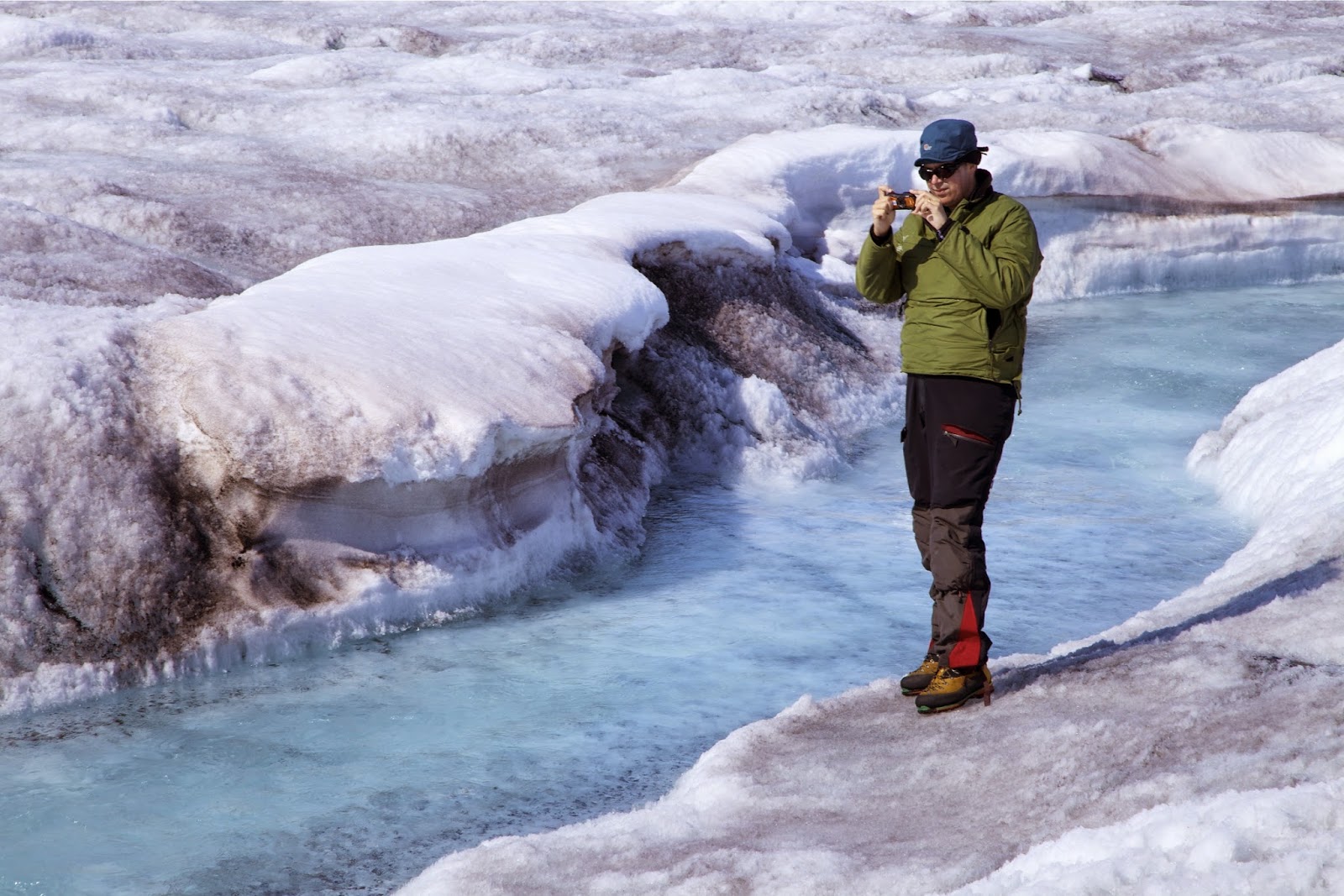
Of ice and life: How important are microbes for glaciers? Aberystwyth University scientist Dr Arwyn Edwards has won an international award in The Microbiome Awards for his work on microbes in glaciers. Dr Edwards is a microbiologist at the Institute of Biological, Environmental and Rural Sciences at Aberystwyth. The award follows a decade of research and a 3 month research marathon during the summer of 2014 in Greenland, Svalbard, the Swedish Arctic and the Alps with still more work to do in South Georgia. The Microbiome Awards provide young extraordinary scientists with funding and recognition to carry out scientific work in the field of microbiome research. A microbiome is a collective of microorganisms in a particular environment. A recently published paper by Dr Edwards and colleagues at Aberystwyth University in the journal Wiley Interdisciplinary Reviews: Water reveals that the fate of Earth’s biggest stores of freshwater - glaciers and ice sheets – is closely linked to the l...

European Grassland Federation conference to be held at Aberystwyth University

Image
Hundreds of grassland experts from across the world will be celebrating 50 years of the European Grassland Federation at a conference in Aberystwyth from 7-11 September 2014. Aberystwyth has been strongly associated with grassland agriculture and in particular the breeding of forage and cereal crops since the foundation of the Welsh Plant Breeding Station (WPBS) in 1919. The influential grassland scientist and environmentalist Sir George Stapledon was its first Director, a post he held from 1919 to 1942. Stapledon argued that grasslands were at the heart of successful agriculture, which in turn was at the heart of Britain's economic and spiritual well-being. For many years his vision was allied with the requirement to increase production from all types of grassland. Meeting bi-annually, this 25th General Meeting of the European Grassland Federation is entitled ‘EGF at 50: the future of European Grasslands'. Dr Athole Marshall, President of the EGF and Head of Public Good Pla...

Higher Education Academy Senior Fellow award for Dr Debbie Nash

Image
Dr Debbie Nash from Aberystwyth University’s Institute for Biological Environmental and Rural Sciences has been awarded Senior Fellow status with the Higher Education Academy (HEA). Debbie is a Senior Tutor and Lecturer in Equine & Animal Science at IBERS and is one of only two women to receive the Award at the University, the first being Alison Pierse, Art and Design Coordinator for Lifelong Learning within the School of Education and Lifelong Learning. The HEA provides a professional framework through which lecturers in higher education can be recognized for good practice, professionalism and excellence in teaching. There are several, increasing levels of recognition that can be attained. The Fellow status is commensurate with attaining a PGCE and the PGCE course offered at Aberystwyth University is accredited for this status. Senior Fellow status is achieved by making an evidence-based application which demonstrates leadership and inspiring and supporting others to develop t...

IBERS at BBC Radio 4’s Gardener’s Question Time Summer Garden Party

Image
Dr John Warren, Director of Learning and Teaching at Aberystwyth University’s IBERS will do a session of James Wong in Conversation and deliver a talk at the gardening event of the year, when BBC Radio 4’s Gardeners’ Question Time is bringing its annual Summer Garden Party to the National Botanic Garden of Wales for the first time on Sunday June 29. James Wong is the Kew-trained botanist, BBC science presenter, RHS Ambassador, and self-confessed Geek. Dr Warren is a plant ecologist with research interests in the maintenance of diversity and enhancement of conservation value. His James Wong in Conversation session will discuss growing more exotic vegetables, and in his own inimitable style, his talk is entitled ‘50 Shades of Green – the exotic sexual practices of plants’. There will also be a demonstration of IBERS PhD student Lizzy Donkin’s computer model that may help gardeners avoid pests by mixing their rows of peas and carrots and IBERS PhD student Sam Thomas will be talking abou...

Grassroots approach to flooding pioneered at Aberystwyth University

Image
Scientists at Aberystwyth University’s Institute of Biological, Environmental and Rural Sciences (IBERS), are working with partners at Rothamsted Research North Wyke in Devon to develop new grasses that enable grassland soils to capture increased volumes of rainfall, thereby reducing the risk of flooding downstream. The five-year £2.5 million LINK project named SUREROOT is funded by the BBSRC (Biotechnology and Biological Sciences Research Council), and match-funded by a range of industrial partners from across the food production spectrum, including a seed company, a major retailer and the meat, poultry and dairy industry. Large areas of the UK are facing continued and widespread threats from flooding that damage UK homes, and are causing the UK economy and agricultural production significant losses (e.g. an estimated £600m in 2012). Many of our river catchments are upland grasslands predominating in the wettest areas of the UK. If the rates of surface run-off could be reduced and r...